
Five owners, one barn, and a farm that never stopped.
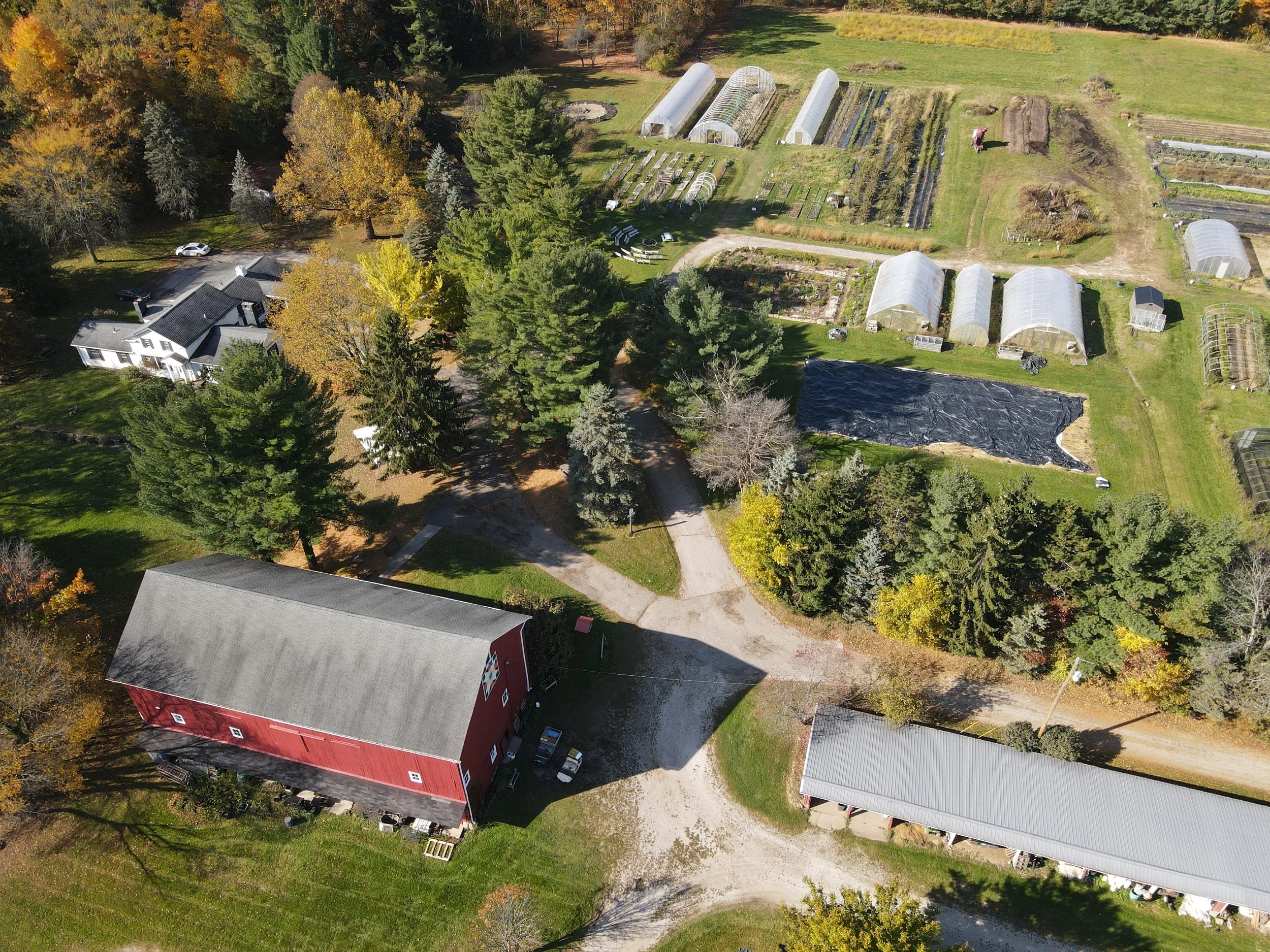
Crown Point’s story begins long before it carried that name. This land has been farmed since 1854, tended by generations of families who shaped its character. In 1967, stewardship passed to the Dominican Sisters of Peace, who planted the vision that grew into Crown Point Ecology Center.
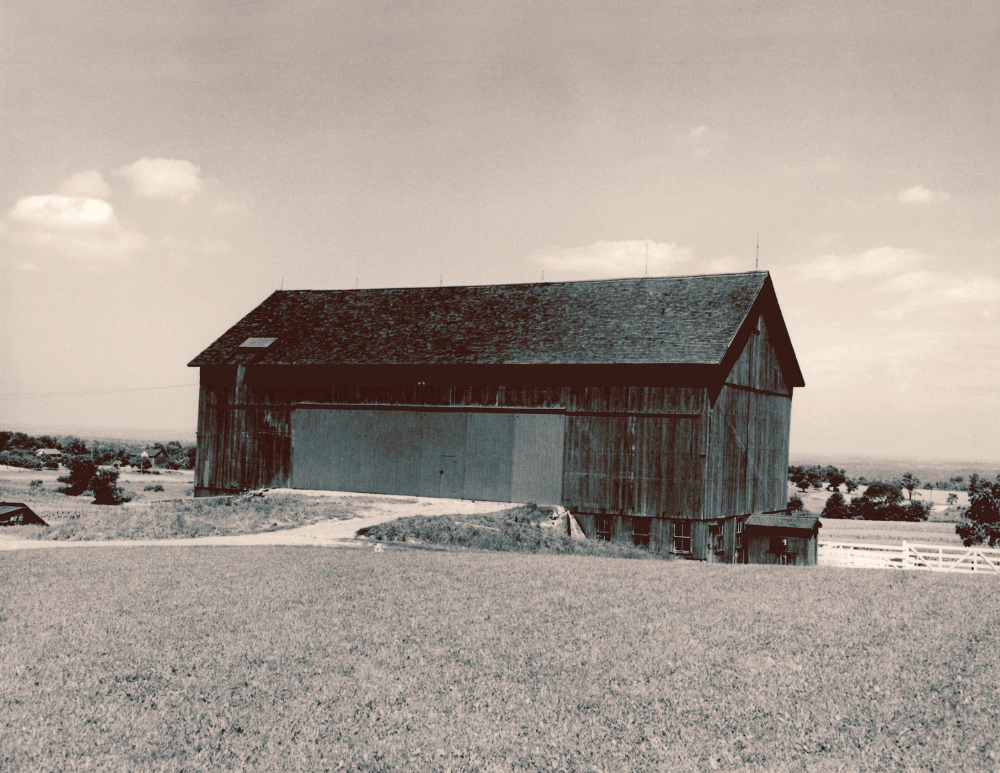
The land, the stewards, and the mission.
This is one story told through three distinct threads: 170+ years of farming on this land, ~60 years of Dominican stewardship, and almost 40 years as an ecology center. The one physical object that connects every era is the Century Barn — the Swigarts never saw it, but the Stollers, the Sisters, and every camper since have.
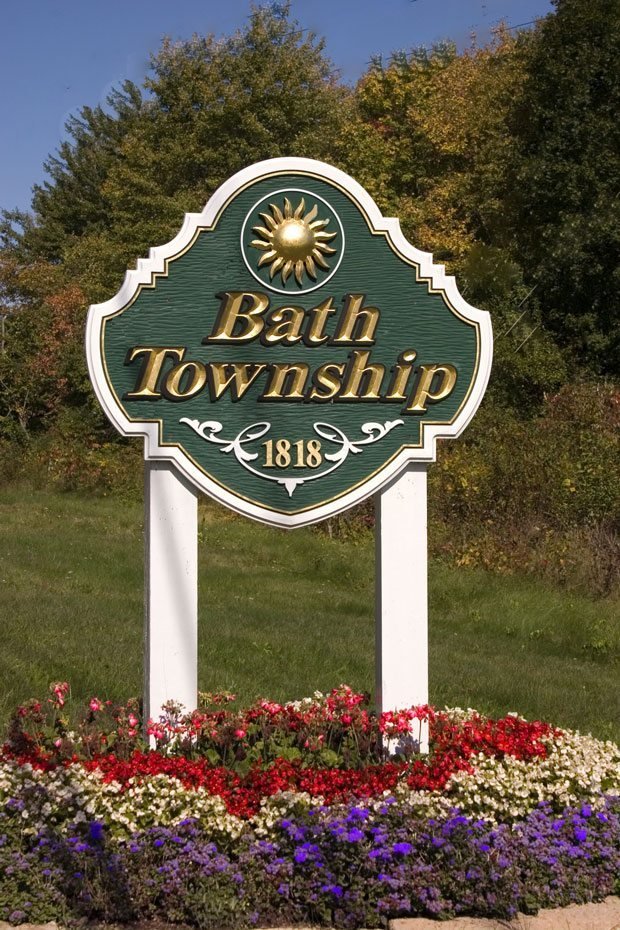
Before It Had a Name
The first European settlers arrived in Bath Township around 1810 — Jason Hammond and John Hale among them — on land that had been home to the Wyandot, Ottawa, Chippewa, Munsee, Delaware, Potawatomi, and Shawnee nations. Hammond, a farmer, miller, and merchant, held roughly 1,100 to 1,500 acres in the township — land that would eventually include what is now Crown Point.
Tax records show that in 1854, Jacob and Abigail Swigart built a farmhouse using hand-hewn wood cut on-site. Between 1862 and 1879 the property changed hands four times before Roswell Hopkins Jr. bought it in 1879 for $9,300. Hopkins owned the land for the next seventy years — but never lived on it. Tenant farmers worked the fields the entire time.
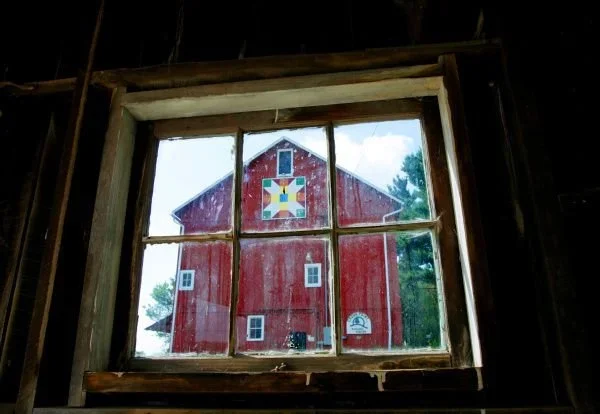
The Barn That's Still Standing
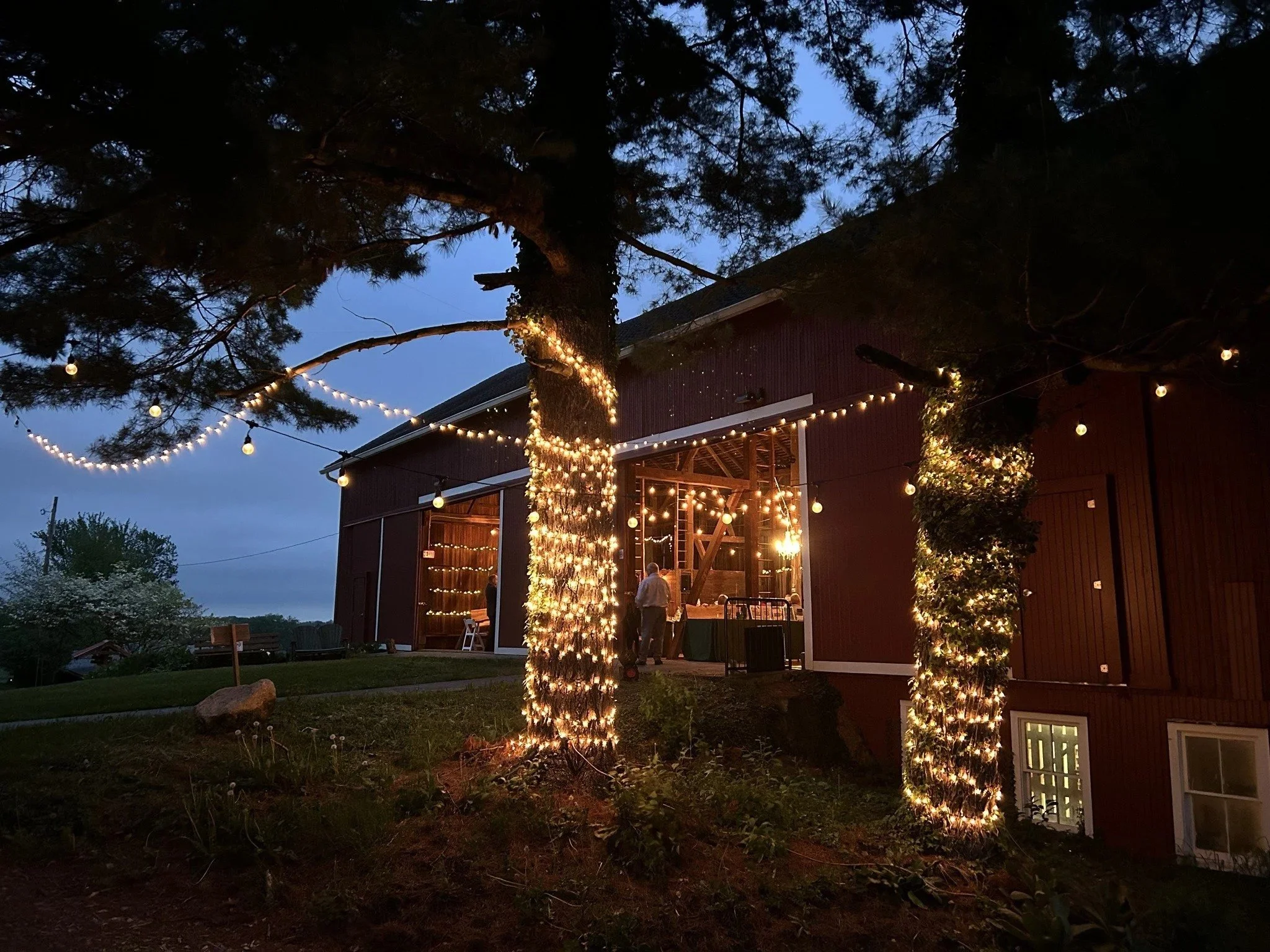
A 1910 appraisal recorded 110 acres of good plow land, 23 acres of fair pasture, 15 acres of fair timber, a house in fair condition — and a barn listed simply as "new." That barn is the same Century Barn that stands at Crown Point today, more than 115 years later. It replaced an earlier barn lost to fire.

The Stoller Farm
In 1949, Hugh and Mary Ann Stoller bought the property. Decades of absentee ownership had left the buildings in poor repair, and the Stollers rebuilt in earnest: the 1854 farmhouse was stripped down to its posts and beams, its basement hand-excavated to add a living room and primary bedroom. Most of the lumber came from trees on the property, milled in the barn.
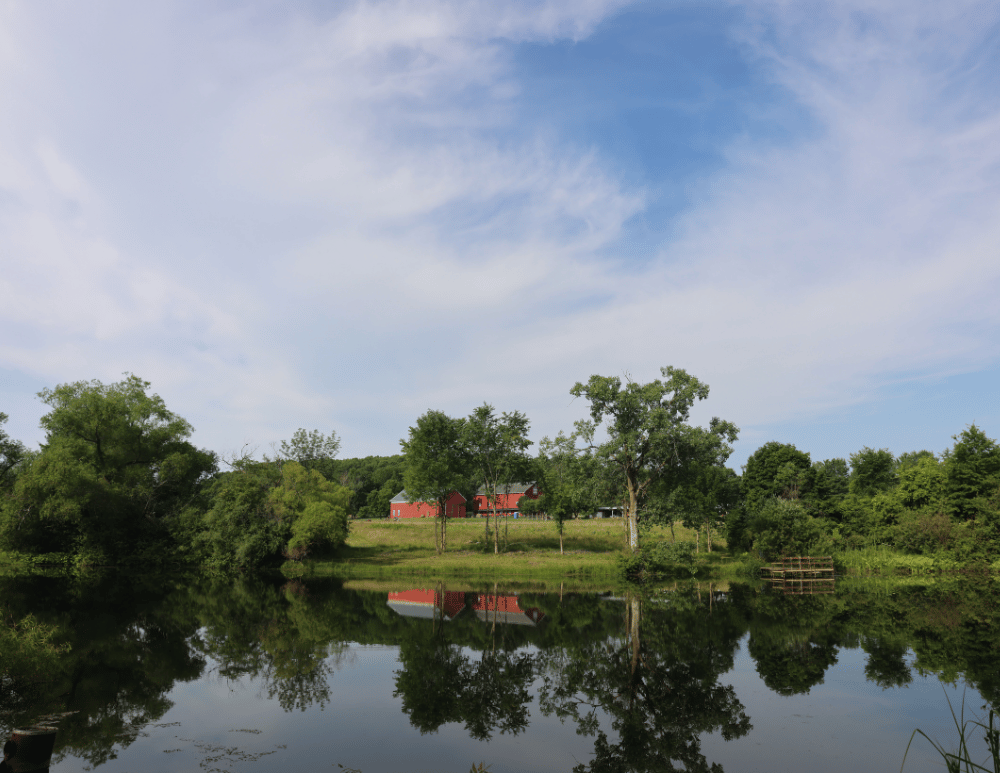
The Stollers ran a serious operation: a registered, prize-winning cattle herd that grew to 87 head at its peak, along with horses, pigs, and a large orchard. In 1962, the Ohio Highway Department purchased 13 acres to relocate Route 21 — now Interstate 77. A year later, in 1963, a spring-fed pond was added to the northeast corner, the same pond still there today.
As Hugh and Mary Ann reached retirement age, neither of their sons wanted to take on the farm. At almost exactly the same moment, a Catholic sisters' congregation in downtown Akron was about to lose its own property — and started looking for somewhere else to go.
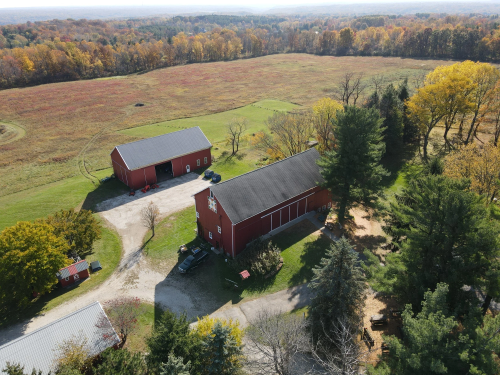
"See the Sights from the Crown Point"
The Sisters of St. Dominic of Akron were planning a new high school, and construction would take the rest of their property near downtown Akron. In August 1967 they toured the Stoller farm with the Bishop of the Diocese of Cleveland — invited, as the story goes, to "see the sights from the Crown Point of Bath Township," a nod to the property's high, scenic vantage. By September 1967, the Sisters had taken the first steps to purchase the farm.
To generate income right away, the Sisters renovated the farmhouse into a preschool under Sr. Kathleen Rachan. The farm atmosphere stayed intact — cattle, ponies, chickens, cats, and dogs remained, the upper level of the barn became a gym for the children, and a small playground with a fort and "lookout hill" was added. The preschool ran from 1968 to 1977.
A Quiet Decade
When the preschool closed in 1977, the Sisters stayed on at Crown Point. The fields were leased out to a farmer, and the Orchard House became a private retreat and vacation getaway. As land values in the area rose through the 1980s, the Sisters faced regular pressure to sell.
In 1988, the Congregation's leadership began seriously studying what to do with the property instead — and the direction they chose was deliberate. The committee's stated focus was determining "the most ecologically responsible use of the land," and they set a rule before anything else was decided: no synthetic chemicals on the fields. Crown Point's organic identity didn't start with a certification. It started with this decision, a year before the ecology center even existed.
Crown Point Ecology Center Is Born
In June 1989, members and friends of the Congregation gathered at the property to celebrate the Environmental Sabbath with a blessing of Crown Point and a prayer of rededication. Sr. Miriam Therese MacGillis — founder of Genesis Farm, a sister ecological ministry in New Jersey — spent two days with the Congregation, encouraging them to maintain and care for the land. The following year, in 1990, Crown Point opened its first public workshops and study groups, formally reinventing itself as an education and ecology center.
Growing Into the Mission
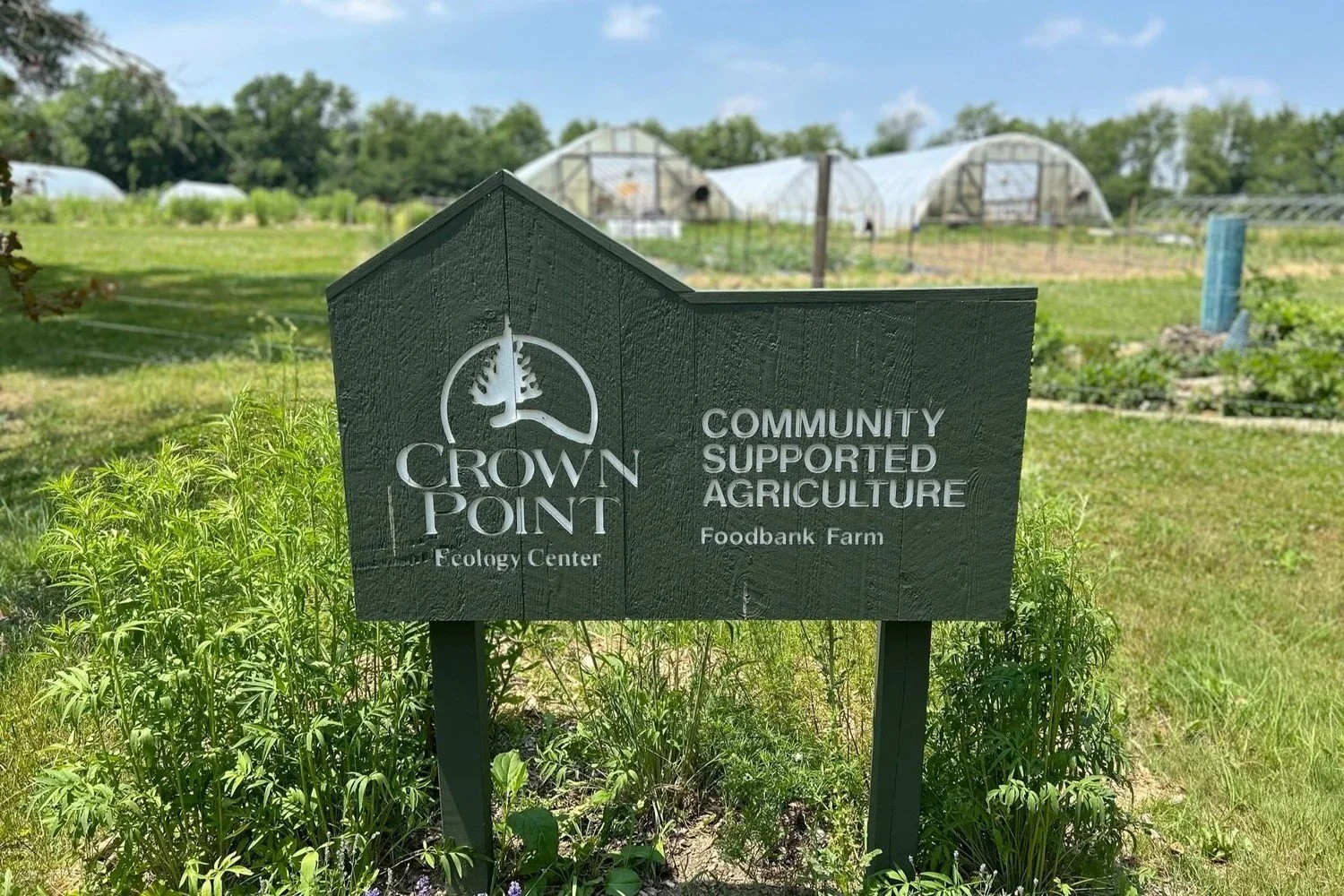
In 1994, the farm earned USDA Certified Organic status — a direct continuation of the no-synthetic-chemicals commitment the Sisters made in 1988, now formalized. In 1997, Crown Point began growing produce specifically for the Akron-Canton Regional Foodbank, launching what staff call the Foodbank Farm. The main organic growing space has fluctuated over the years — currently totaling 12 acres.
In 1998, Crown Point launched a Community Supported Agriculture program, starting with 20 families. The CSA now averages 120 families each season. In 2010, marking the Century Barn's 100th anniversary, local quilter Nancy Terjesen created a "Dove in a Window" quilt square for the barn, dedicated to Sister Laura Wallace, Crown Point's master gardener and creator of the quilts sold each year at the Taste of Earth fundraiser.
Standing on Its Own, Same Roots
Also in 2010, Crown Point reincorporated as its own 501(c)(3) nonprofit — stepping out from under the Dominican Sisters of Peace's direct financial umbrella and taking its first steps toward being self-funded through members, programs, and donations. The Sisters remained involved, but from this point forward Crown Point governed and funded itself.
Since 2010, Crown Point has been led by Chris Norman, Nancy Wolf, Alicia Bongue Bartelsman, Carolyn Kean, and Kevin Gross — each steering the same 115 acres through a new chapter — before Ian Roberts became Executive Director in 2025. Each brought the same 115 acres into a new chapter — but the thread running underneath goes back further than any of them: a farmhouse built by hand in 1854, a barn raised in 1910, and 170+ years of a farm that has never once stopped being a farm.
170+ years, at a glance.
A visual spine for the full history — not a replacement for it.
"To demonstrate the practical applications of ecology and to connect spirituality, social justice and environmental protection."Crown Point's Mission — the thread through 170+ years
The story continues — with you in it.
170+ years of history is only as good as what happens on this land next.