
The average American farmer is nearly 60. We're training who comes next.
A full-time, paid, eight-month immersion in regenerative farming on 115 certified organic acres — no tuition, no experience required, just curiosity and a strong back. Four trainees a season learn everything from seed to market, travel off-farm to see the wider regional food system firsthand, and leave able to run a farm of their own.
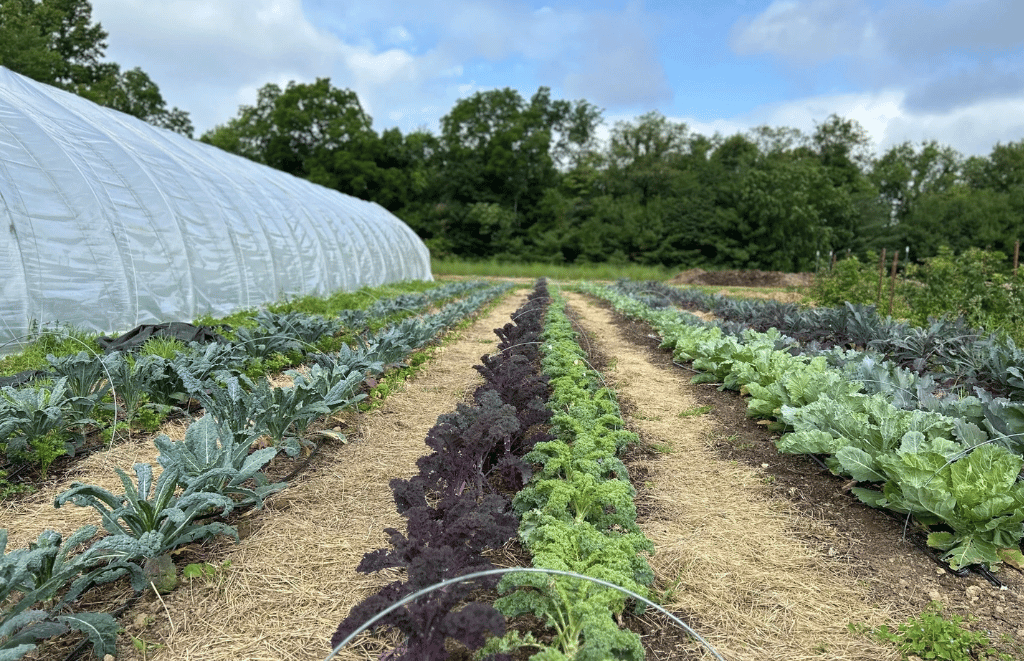
Why this program exists now.
Over a third of America's farmers are past age 65, and climate instability is reshaping how — and where — food can be grown at all. Local food resilience isn't a someday problem. Crown Point has spent 35 years proving organic, regenerative farming works on this exact soil. This program exists to make sure that knowledge doesn't retire with the generation that holds it.
Every trainee learns on a working, certified organic farm that already feeds its own community — not a demonstration plot. The produce grown during training goes to real CSA shareholders and real food-insecure families through Crown Point's donation partnerships, the same day it's harvested.
"This program is ideal for aspiring farmers, food-justice advocates, and future land stewards who want to build resilient and equitable food systems in Northeast Ohio and beyond."— Ian Roberts, Executive Director
Seed to market, eight months at a time.
Establish
Seedling propagation, greenhouse management, bed prep, soil planning.
Plant
Transplanting, succession planting, irrigation setup, low-till systems.
Grow & Harvest
Daily field ops, pest and weed management, weekly harvest planning.
Wash, Pack, Sell
Wash/pack workflow, CSA prep, cooler management, distribution.
Lead, Learn & Look Beyond
Volunteer leadership, farm business basics, and field trips to other regional farms and food hubs.
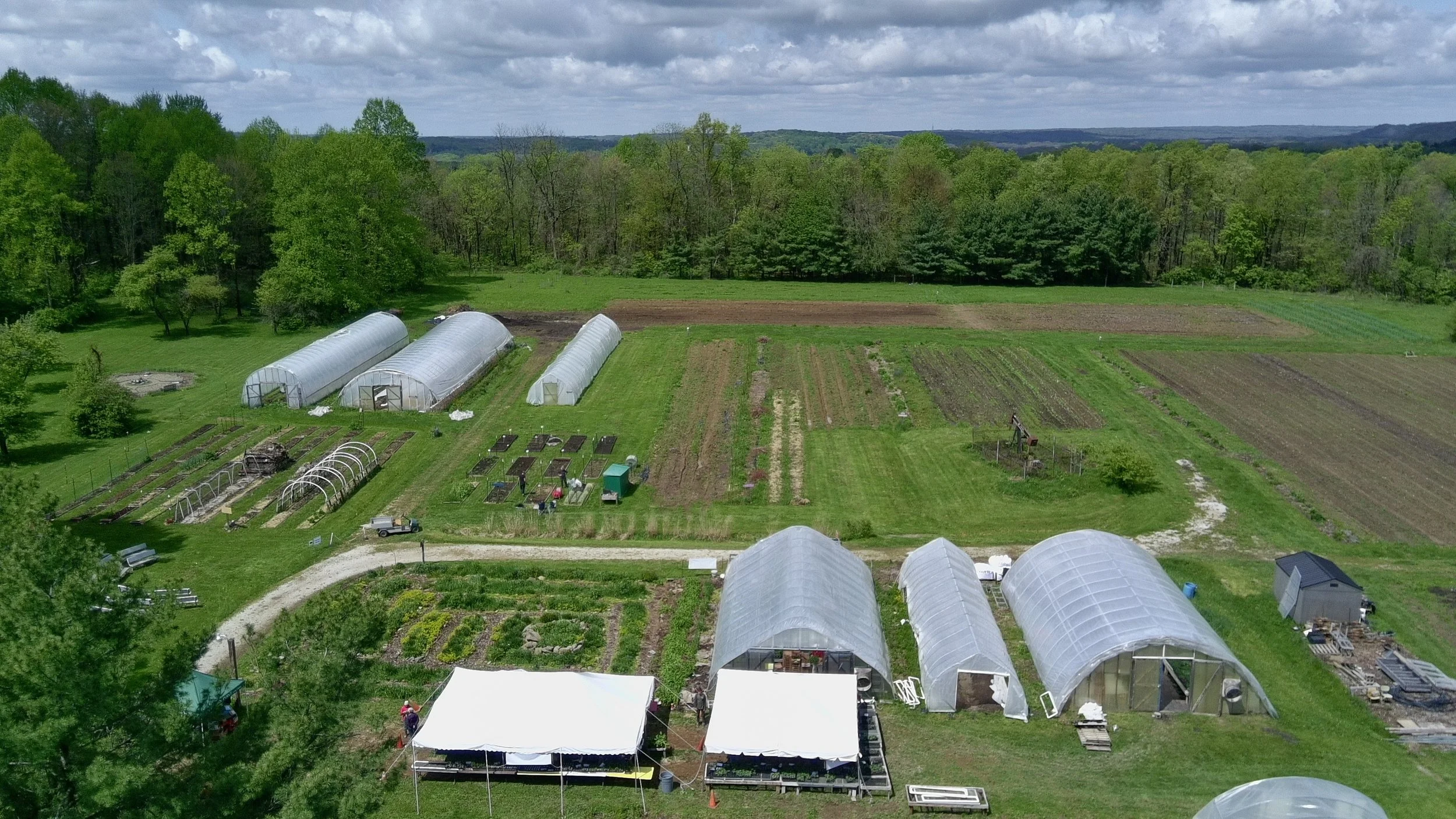
A working farm, not an empty field.
Trainees don't learn in isolation on a demonstration plot. Crown Point's 115 acres are already a full working community: 110+ CSA member families who'll ask what's good this week, more than 50 refugee families growing food of their own on the farm's certified organic acreage through the Vulnerable Voices partnership, summer campers learning where food comes from for the first time, and volunteers who show up because the mission means something to them. Trainees become part of that community immediately — not observers of it.
What trainees actually learn.
Regenerative Growing Practices
- Soil-building: crop rotation, cover cropping, mulching, composting
- Hands-on low-till systems
- Organic pest, weed, and disease management
Field Skills & Infrastructure
- Daily field operations: bed prep, planting, cultivation, harvest
- Hand tools, broadforks, walk-behind tractors
- Irrigation installation, troubleshooting, water conservation
Harvest-to-Market Skills
- Weekly harvest planning and execution
- Wash/pack workflows, post-harvest quality standards
- Cooler management, storage, CSA prep and distribution
Farm Planning & Leadership
- Seedling propagation, greenhouse management, season extension
- Crop planning, succession planting, recordkeeping
- Leading volunteers and co-managing community workdays
- Direct exposure to Crown Point's food-donation partnerships
- Field trips to other regional farms, food hubs, and agricultural operations to see the wider food system beyond Crown Point
Additional Hands-On Experience
- Seed saving and plant breeding basics · Soil testing and fertility planning · Tractor skills (as appropriate)
- Community engagement through education and events · Working across a diversified system of perennials, herbs, and rotational crops
Compared to the best farmer training programs in the country.
$15/hour — with nothing owed in return.
Most farmer training programs nationally ask something of participants: a course fee, a season of unpaid labor, or both. Crown Point pays $15/hour from day one, with no tuition and no fee to apply or attend. Trainees don't cover the cost of their own training — they get paid to receive it.
Four trainees, not thirty-six.
Large programs train dozens per cohort. Crown Point's cohort of four means daily, direct mentorship from experienced growers — not a lecture hall.
Training feeds people, immediately.
Trainees don't practice on a demonstration plot — they grow food that goes directly into Crown Point's CSA and its Akron-Canton Foodbank donations the same week it's harvested.
Real diversification, not one crop.
Row crops, perennials, high tunnels, and fruit cultivation on the same 115 acres — training for the kind of small, diversified farm most graduates will actually go on to run.
The theory of change.
Ohio loses experienced farmers to retirement every year, and the next generation isn't replacing them fast enough — a national pattern, not a local one. Crown Point's program doesn't just fill four seats a season; it tests a replicable model: pay farmers-in-training a real wage, put them on a working certified-organic farm, connect their labor directly to food-insecure neighbors, and send them out with the skills to start their own operation. Every graduate who goes on to farm — here, elsewhere, or on their own land — multiplies the program's impact well beyond Crown Point's 115 acres. That's the pitch to a funder: not "we trained four people," but "we're building the pipeline Northeast Ohio's food system needs, and we've already proven the model works on our own soil for 35 years."
Sponsor a trainee.
At $15/hour over an eight-month season, funding one trainee's full wage costs an estimated $18,000–$21,000 — a concrete, fundable unit of impact for a foundation, corporate sponsor, or major donor who wants to see exactly what their gift produced: one more trained regenerative farmer in the regional food system.
No farm experience required — just curiosity, commitment, and a strong work ethic.
Frequently asked questions.
Do I need farming experience to apply?
Is this a paid position?
How long is the program and when does it run?
How many trainees are accepted?
What will I be able to do by the end?
Applications for the 2027 season will be opening soon.
Four spots per season, on 115 certified organic acres. Check back regularly to apply — cohorts are small and fill quickly.
Four spots. One season. A farm that outlasts you.
Every graduate leaves with the skills to run a farm of their own — and the community to back them up.