
Our animals play an essential role in how this farm works — from soil health to pasture management.
Livestock manure becomes part of the compost that feeds Crown Point's fields. Goats, pigs, a coop full of chickens and ducks — are a working piece of the same ecological system that grows the CSA's vegetables and teaches every camper and visitor the same lesson Crown Point has taught since 1989: food, soil, and animals are a connected system.
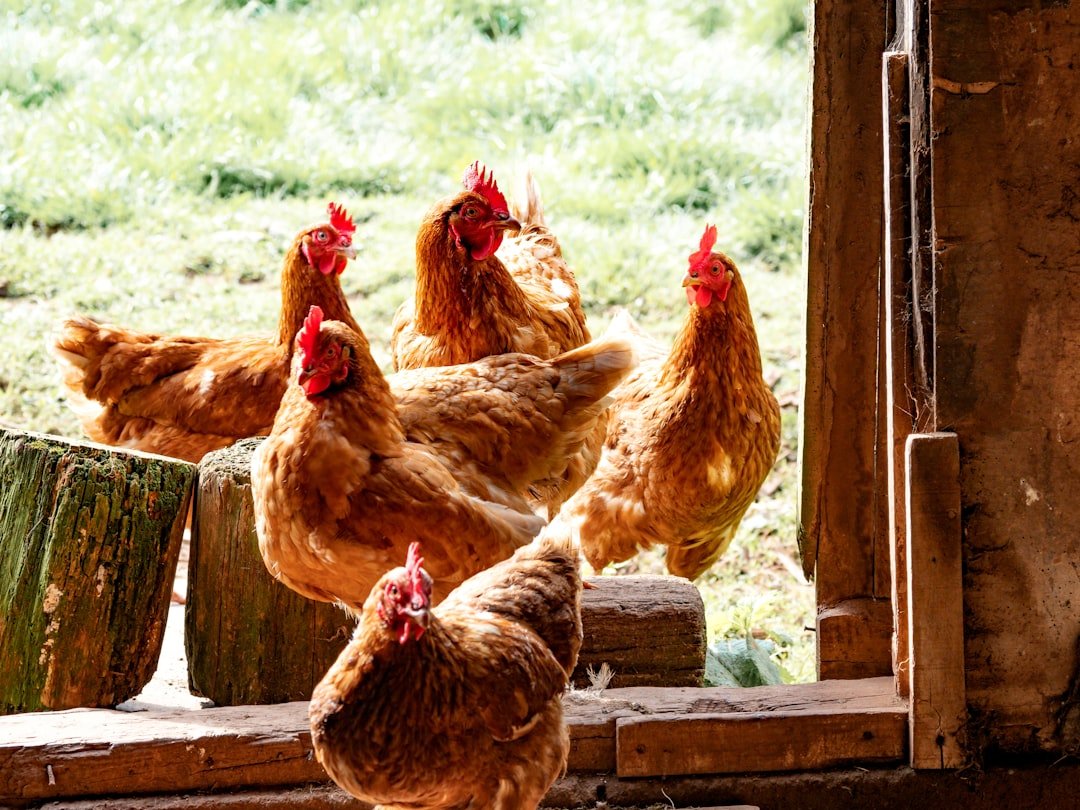
Nine named residents, plus a flock.
Every one of them came to Crown Point as a baby and grew up on this land — no rescue story, no dramatic backstory, just animals that have never known anywhere else.
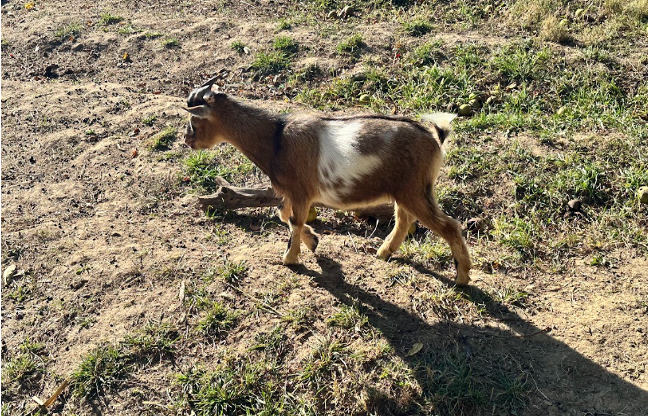
Cookie Dough
Nigerian Dwarf Goat
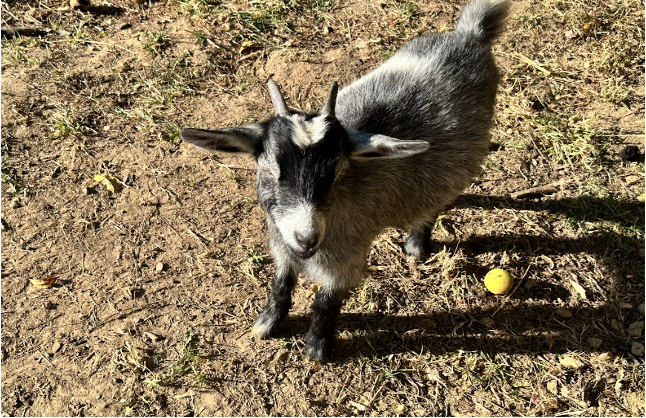
Bluey
Nigerian Dwarf Goat
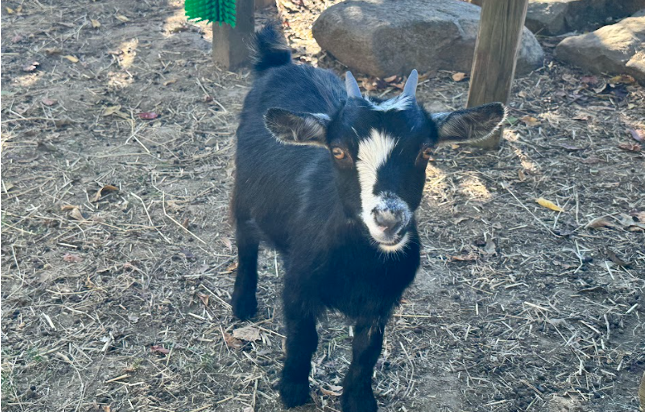
Bandit
Nigerian Dwarf Goat
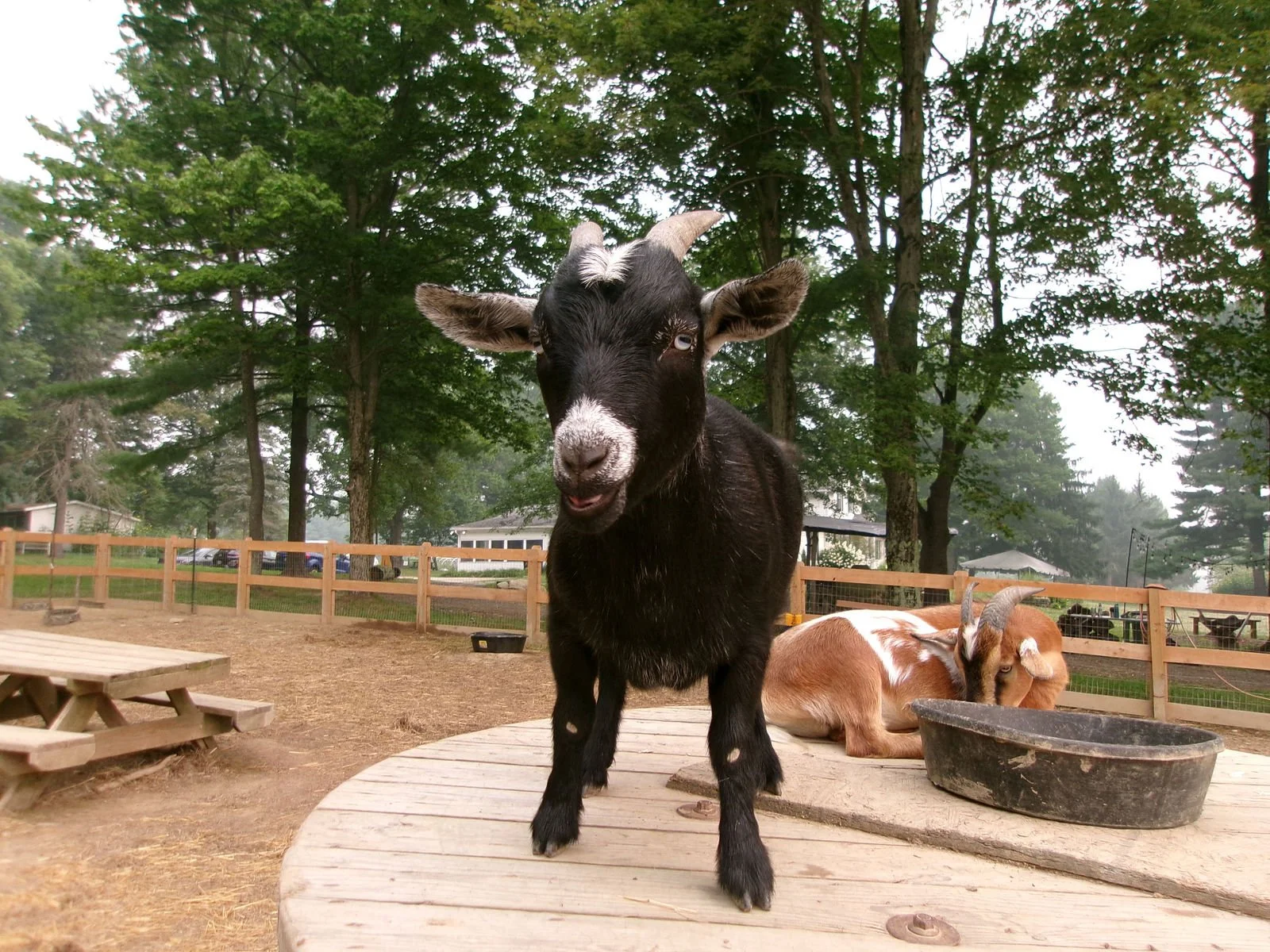
Bingo
Pygmy Goat
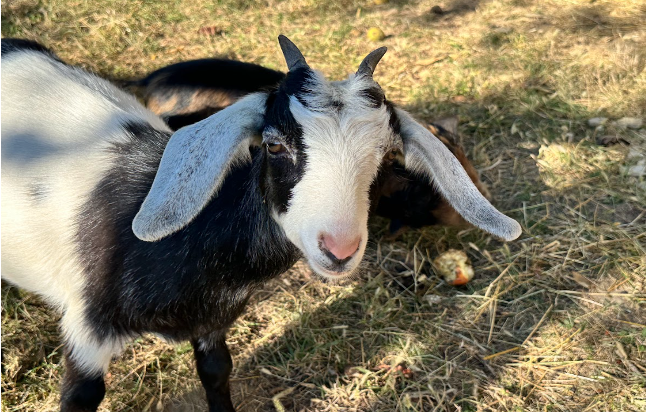
Oreo
Mini Nubian Goat
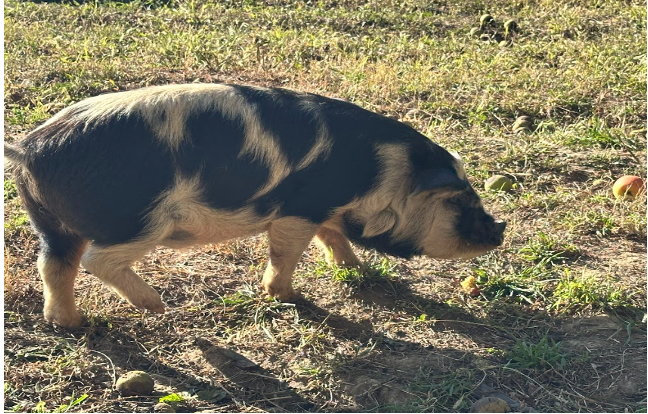
Waffles
Kunekune Pig
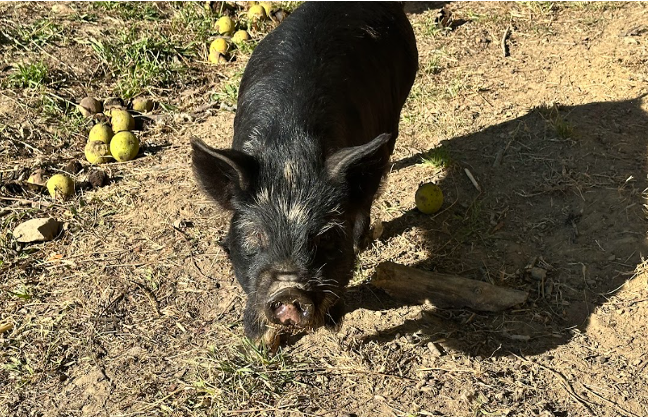
Otis
Kunekune Pig
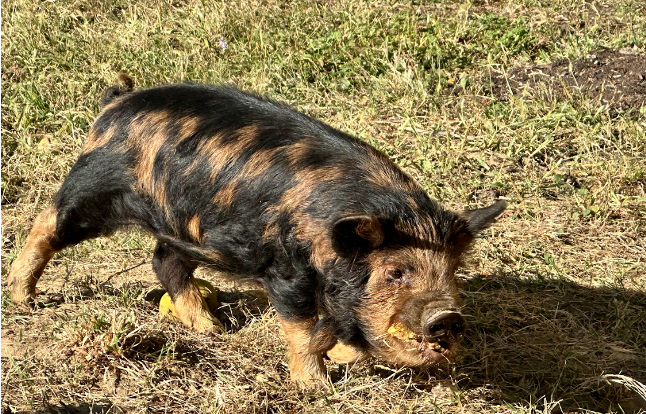
Pumpkin
Kunekune Pig
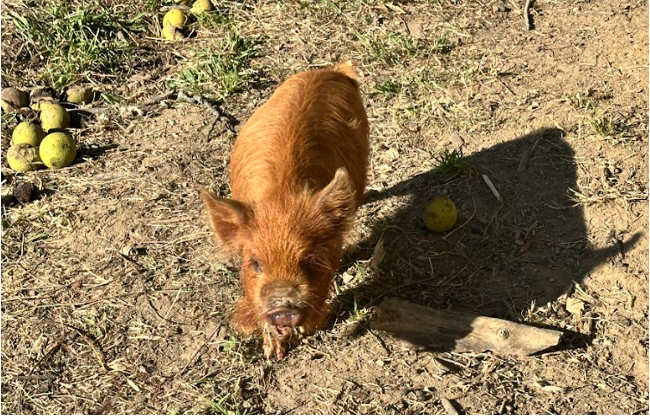
Penny
Kunekune Pig
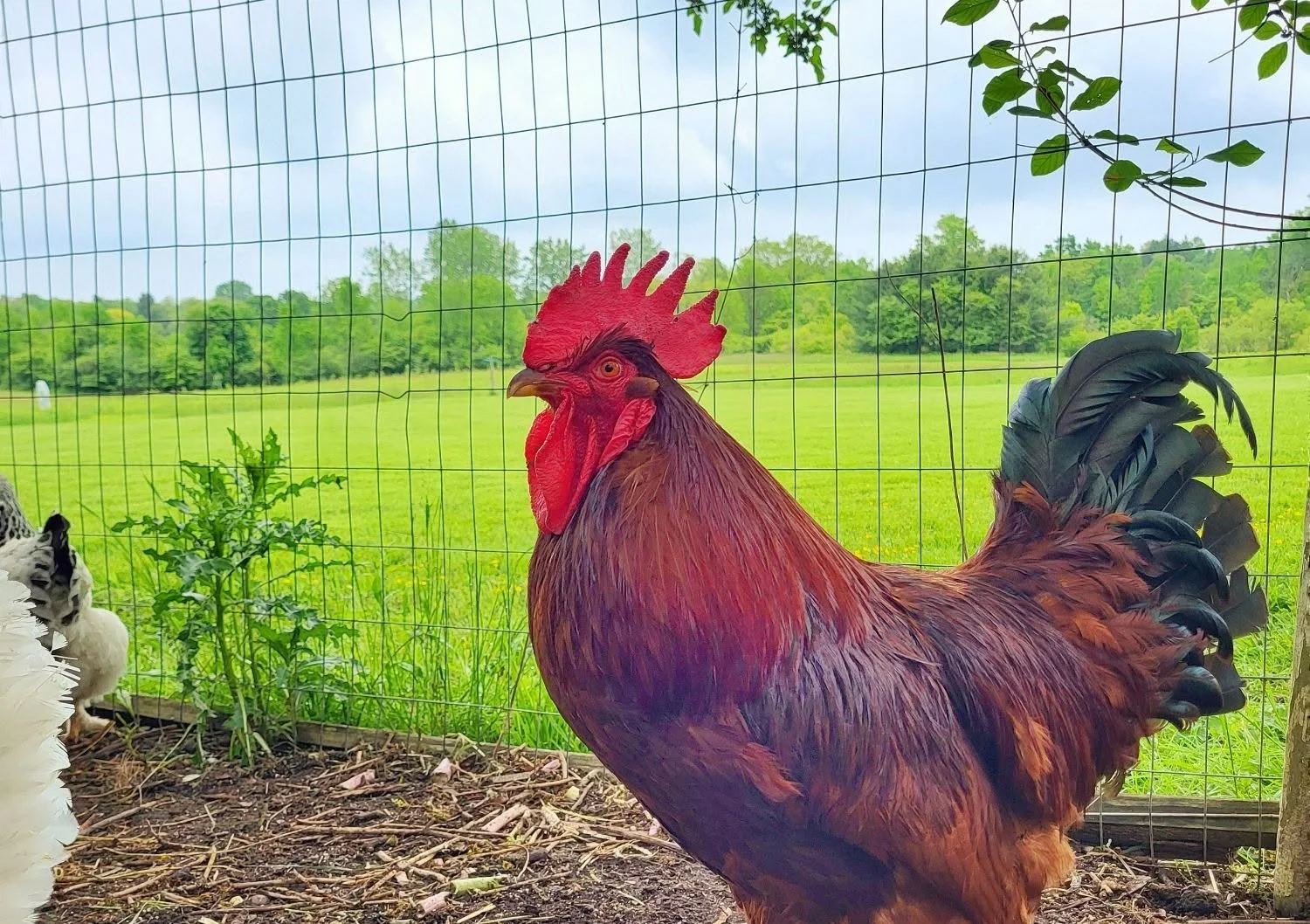
The Flock
Chickens & Ducks
Two Breeds Worth Knowing
Kunekune pigs are a small, docile, pasture-grazing heritage breed originally from New Zealand — bred for grazing rather than rooting, which makes them a genuinely good fit for a working farm rather than a novelty.
Nigerian Dwarf goats are a small dairy breed known for being friendly and easy to handle, which is exactly why they're a common choice for educational and therapy programs nationally.
How we keep everyone safe.
What actually happens on-site to protect visitors and animals alike.
For Visitors
- Hand-washing stations at every animal contact area
- Physical barriers separating visitors from animals not available for touching
- Posted signage on zoonotic disease risk and hand-to-mouth contact
- Eating areas kept fully separate from animal areas
- First aid kit on-site for any bite, scratch, or minor injury
For the Animals
- Only domesticated farm-type animals — no exotic or high-risk species
- Clean, sanitary housing maintained year-round, not just for visits
- Animals never in food service or eating areas
- Regular health monitoring and veterinary care
Licensed, Not Informal
Crown Point holds a Permanent Petting Zoo Permit through Summit County Public Health — the classification for a fixed, ongoing operation rather than a one-time or traveling event — renewed annually and posted conspicuously on-site, as required by county code. This isn't a courtesy; it's a legal requirement for any organization allowing public contact with animals in Summit County, and Crown Point treats it as a floor, not a ceiling.
Woven into every program.
Animal care isn't a separate attraction — it shows up across Crown Point's programming.
Summer Camp
Daily animal care and feeding built into each week's camp routine, for every age group.
See Camp Sessions →Soil to Soul Field Trips
Animal encounters as part of curriculum-aligned school visits.
Book a Field Trip →Backyard Chickens 101
A dedicated community program for anyone considering keeping chickens at home.
Click for Details →Teen & Adult Volunteers
Animal care and morning chores are open to volunteers of any age — not just camp staff.
See Volunteer Opportunities →Adopt an Animal.
A symbolic sponsorship, named to the animal
Symbolically sponsor a specific named animal — Bandit the goat, or Waffles the pig — in exchange for a certificate, a photo, and the knowledge that your gift covers that animal's feed and care for a season. With nine named, distinct animals, Crown Point has exactly the raw material this model needs.
Adopt an AnimalFrom the flock to the Farm Stand.
Fresh eggs, traceable to the source
The eggs sold at Crown Point's honor-system Farm Stand come from these same chickens — not a distributor. It's one of the clearest, most concrete lines connecting the animal program to something a visitor can actually buy and eat.
Visit the Farm Stand →Frequently asked questions.
Can visitors touch the animals?
Can I feed the animals?
Can I visit the animals outside of camp or a scheduled program?
Is it safe for young children, pregnant visitors, or anyone immunocompromised?
What should I do after touching an animal?
Every animal on this farm has a job — and a name.
Come meet them at camp, on a field trip, or at a community program.